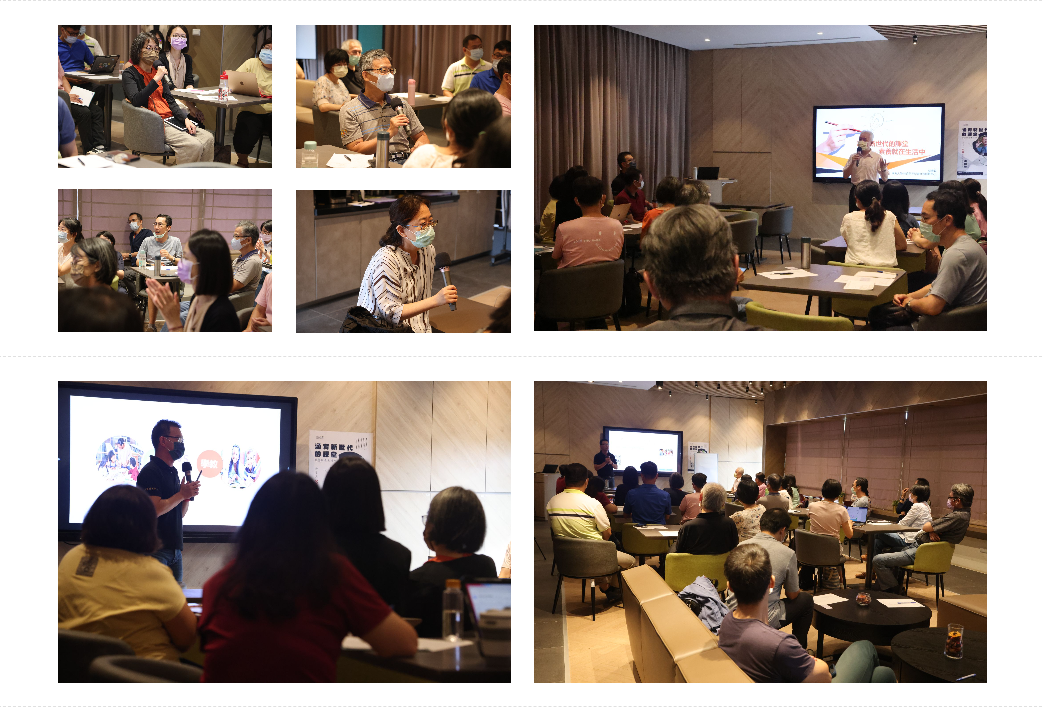
【活動紀實】涵育新世代的課堂—素養就在生活中
時 間:2022年08月30日
地 點:東海大學展學廳
分享者:教研所巫博瀚老師

▍設計:教學內容、教學活動、評量
布盧姆分類學 (Bloom‘s taxonomy) 認知範疇(Cognitive Domain)包括,記憶、理解、應用、分析、評價、創造。而「記憶、理解、應用」是低階思維能力,「分析、評價、創造」則是高階思維能力。教師期望是培養學生高階思維能力,傳統的紙筆測驗是測量到學生哪一種思維能力?
「核心素養」是指一個人為適應現在生活及面對未來挑戰,所應具備的知識、能力與態度。素養導向的課程設計應關注學習與生活的結合,而真實世界的問題,往往不是單一學科或專業領域就能克服,所以不宜以學科知識及技能為限。素養導向的課程設計,教師角色是不一樣的,教師是學生學習經驗的設計師,設計學生體驗、統整,以及反思學習經驗。
▍教師教的多,學生也學的多嗎?
巫老師請現場師長回想自己過去糟糕的上課經驗並分享,那是一門什麼課?學什麼?當時老師是怎麼進行教學活動?回想完糟糕的經驗後,再回想最難忘與最美好的學習經驗。
要獲得長久,真實的快樂通常是天賦,興趣,或是努力被滿足及成就的時候。老師與學生對於課堂的專注度相反,老師會將重點放在中段,而學生會沒有關注,若是再這個時段加入一些活動,例如說故事、玩遊戲、吟唱等方法去吸引學生興趣。實作任務,且通過對話會讓記憶深刻並拓展經驗。
好玩的課程通常是「老師教得少,學生學的深」。讓學生先行動,體驗並學習,再輸出,記憶才會深刻美好。
▍教學分享
Tips1:用問題來引導學習及組織教學活動
Tips2:向學生提問讓同學思考,教師再歸納並與課程內容作結合。
※ 不一定請學生舉手回答,可以用摸摸耳朵等表達他們想回答這個問題。
Tips3:把要教給學生的內容,包裹在問題中,向同學進行提問。
Tips4:訂定教學目標,選擇學習經驗、組織學習經驗(設計學習經驗),評量學習成果。
Tips5:提供學生學習該主題的理由與重要性。
Tips6:如何促進學習專注-321(課程快結束時可以使用)
1)寫3件今天學到的東西
2)寫2個你今天聽到有些疑惑的地方
3)寫1個你再學習或實踐上的具體行動。
Event record: classroom that cultivate the new generation - competency in daily life
Time: August 30, 2022
Location: Tunghai University
Speaker: Professor Po-Han Wu from Tunghai Graduate Institute of Education
▍Design: Class content, activities, and evaluation
Bloom's taxonomy cognitive domains includes memorization, comprehension, application, analysis, evaluation, and creation. Of those cognitive domains, memorization, comprehension and application are lower-order thinking skills, while analysis, evaluation and creation are higher-order thinking skills. Professors wish to help students develop higher-order thinking skills, however, which type of thinking skill do you think traditional paper exams are evaluating?
"Core Competency" covers the knowledge, skills and attitude required for a person to adapt to their current life and to face their future. Competency-based course design should focus on the integration of learning and life. Real life problems often cannot be solved by a single disciplinary or expertise, therefore what is taught should not be limited by single discipline or skill. Competency-based courses have different course designs, and professors also have different roles. The professors are the designers of the students' learning experience, they design the learning experience, integration and reflection on their learning experience.
▍If a professor taught a lot, does that mean students have learnt a lot?
Professor Wu promoted the professors at the event to think back to bad experiences in class and share those experiences. What kind of class was it? What were they learning? How did the professor conduct the learning activities? After thinking about the worst experience, think about the hardest to forget and best learning experience.
The acquisition of long lasting, genuine happiness usually happens when talent, interest or hard work is satisfied and accomplished. Professor and students have opposite attention levels. Professor would usually put the key information in the middle of the course, and students might not have paid attention. If you add some activities, such as storytelling, little games or chanting can help recapture the attention of students. The activities and conversation will deepen the memory and expand experience.
Fun courses usually are those where「professor taught less, students learnt deeper」. The memory will be profound and good if let the students take action, experience and learn, then output.
▍Teaching sharing
Tip 1: Guide learning and organized classroom activities through questions
Tip 2: Let students ask questions to promote thinking among students, the professor can then integrate and lead back to the course content.
※ Student don’t necessarily need to raised their hand if they have questions, they can also use other actions such as touching their ear to express they want to answer this question.
Tip 3: Integrate the content in the question and ask students to answer
Tip 4: Set learning goals, choose learning experience, organize learning experience (design learning experience), evaluate the learning result
Tip 5: Offer students insight into the reason and importance of learning the topic
Tip 6: How to promote learning attention - 321 (apply near the end of the class)
-
Write down 3 things you learned today
-
Write down 2 things you were confused about
-
Write down 1 specific action you are taking to learn or practice
撰文:鍾妤儒
翻譯:楊思媛