生成式AI玩未來教室與選課系統 與學生共同思索不同可能性
- 日期 : 2023-12-13
- 分類 : 探索動態
- 點閱 : 1111
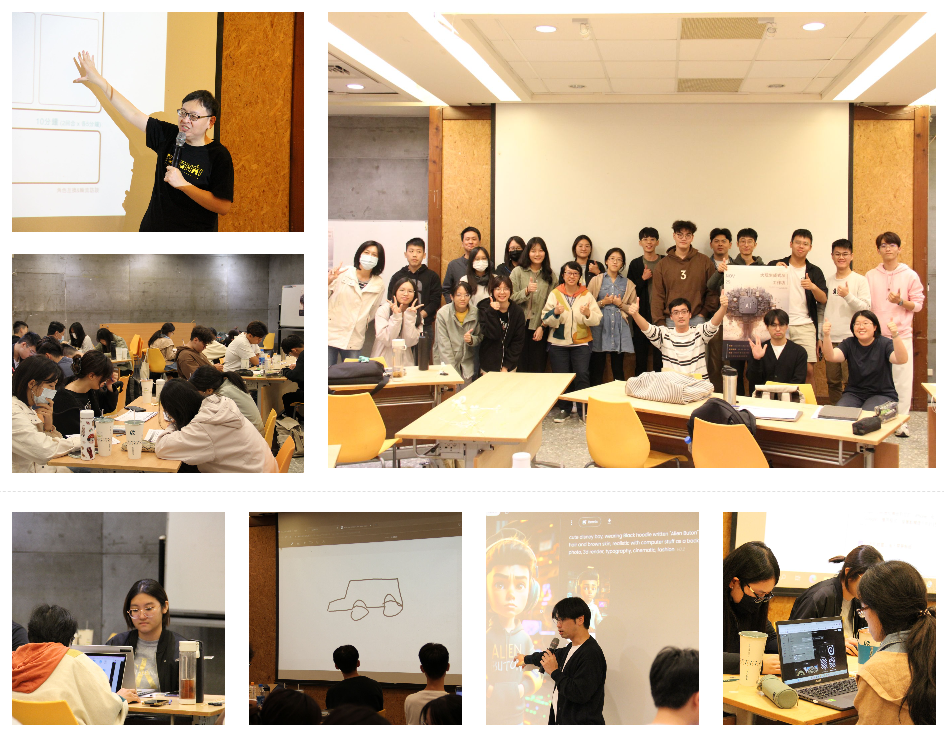
生成式AI是今(2023)年的熱門關鍵字。為了培育學生在學習成果善用生成式AI,東海大學素養導向高教學習創新計畫和東海苗圃計畫攜手合作,於11月25日舉辦「大玩生成式AI工作坊」活動。參與的學生來自不同領域,包括日文系、行政系、哲學系、企管系、社會系、財金系、資管系等,共25位學生一起共思未來教室以及選課系統調整。
東海苗圃計畫帶領設計思考工作坊為參與學生開啟了一場共同思索的旅程。以兩人一組進行設計思考,一開始的同理階段讓參與學生深入瞭解對方對未來教室和選課系統的需求和期望。透過對話,在對方的感受和動機中找到了新的視角,突破了自身思維框架,發現了潛在的需求和機會。以使用者為需求設計先手繪出解決方案,並與對方分享,聽取對方回饋,再調整解決方案的設計。
生成式AI涵蓋種類繁多,亞洲大學謝錫安講師說明生成Prompt架構,首先,關鍵字順序會影響權重;再來,用詞可以分為主題(車、玩具…)、風格(流線的、柔軟的…)、材質(白色塑膠、紅色電鍍…)、渲染(插畫、寫實、3D渲染…)、攝影方式(前視圖、正視圖…),越精準下達指令將更有助於圖像生成符合想像。也提到可以善用輔助工具,例如Chrome外掛沉浸式翻譯。
最後,參與學生發表對於未來教室與選課系統的不同需求與解決方案。日文系許同學認為,大學授課時間固定,教室內空間擁擠移動較費時費力,而且學生自主學習時間與動力嚴重不足。她對於未來教室的想像是,教學可以在教室外進行,也能在校園各個地方,學習內容不侷限可以是更多元的主題,例如疊杯子課程內容可以是、甚至打電動等等的自由主題。而化材系欒同學則認為,教室空間應該可以自由變更及組合,才能符應不同教學需求。現行選課系統,食科系邱同學表示是以學校為出發點設計網站,無用的資訊過多,學生需求的資訊都要到負責處室網站查找。行政系陳同學和食科系李同學提出對於選課系統的需求是,瞭解各系課程內容、歷屆選課人數、以星級或評語得知完修學生對於課程評價,以增設微學分課程和衝堂選課機制,提供一個多元、跨領域修課機會,自由、彈性且限制少的選課方式。
Generative AI is the buzzword of the year. In order to cultivate student’s ability to effectively utilize generative AI academically, Tunghai Univeristy’s XPlorer Project collaborate with Tunghai University Design-Thinking. Working together, to host the “Play with Generative AI Workshop” event on November 25th. Participants include students from various disciplines, such as department of Japanese language and culture, department of public management and policy, department of philosophy, department of business administration, department of social science, department of fiancé, department of information management, etc. A total of 25 students collectively engaged in envisioning the future classrooms and fine-tuning the course selection system.
Tunghai University Design-Think led a design thinking workshop that initiated a collective journey for the participants to think and explore possibilities together. The participants worked in pairs on design thinking. The empathy stage allowed participants to gain a deep understanding of each other’s needs and expectations for future classrooms and the course selection system. The participants discovered new perspectives from each other’s feelings and motivations, thought outside of the box and discovered potential need and opportunity through conversations. Participants sketched out designs according to a user-centric approach, based on need and expectations, shared the designs with each other, received feedback from their partner, and readjusted their designs accordingly.
Generative AI encompasses a diverse array of categories, His-An Hsieh, from Asia University explains the structure of prompt for generative AI. First, the sequence of keywords would influence the weighting; additionally the keywords can be stored according to themes (e.g. cars, toys…), style (e.g. streamline, soft…), material (e.g. white plastic, red electroplating…), rendering (e.g. illustration, realistic, 3D rendering…), photography method (e.g. front view, top view…). Providing a more precise prompt, will enhance the accuracy of the generated image to one’s imagination. We can also utilize accessory applications, like Chrome plug-in immersive translation.
Lastly, participants presented different needs and solutions for future classrooms and the course selection system. Hsu from the Department of Japanese language and culture believes the blocked schedule makes the classroom crowded, strenuous and time consuming to move around. There is also a lack of self-directed learning and motivation among students. Her imagination of the future classroom allows learning outside of the classroom, across various locations on campus. And the content should not be limited and have a more diverse theme, for example speed stacking or even playing video games. Luan from the department of chemical and materials engineering thinks classroom spaces should be modular, providing freedom to regroup in different combinations to account for different teaching needs. On the topic of the current course selection system, Qiu from the department of food science expressed that the university’s website was designed from the perspective of the university and contains excessive irrelevant information. Students need to go to the website of each individual office to find the information they need. Chen from department of public management and policy and Lee from department of food science highlight the need for understanding course content across departments, historical enrollment numbers, course evaluation in star rating or comments from students that have taken the course before. And increase numbers of microcredits and allow students to select courses with schedule conflict (only available if one of the courses offer asynchronous options), offering a more diverse, interdisciplinary learning opportunity, with more flexibility and less restrictive course selection approach.

撰文:吳孟珊
翻譯:楊思媛